Where Culture Meets Craft: Shopping in Hallstatt That Feels Like Time Travel
Nestled between misty mountains and a mirror-like lake, Hallstatt feels like a dream whispered from another century. But beyond the postcard views, what truly stole my heart was shopping here—not for souvenirs, but for stories. Every wooden carving, handwoven textile, and ceramic piece carries centuries of Alpine tradition. In Hallstatt, shopping isn’t consumerism; it’s cultural immersion. Let me show you how every purchase can become a meaningful connection to Austrian heritage.
The Soul of Hallstatt: More Than Just a Pretty Village
Hallstatt, a UNESCO World Heritage site nestled in Austria’s Salzkammergut region, is more than a picturesque destination—it is a living archive of Alpine culture. With a history stretching back over 7,000 years, the village has long been shaped by its dramatic geography and rich salt deposits, earning it the nickname "the world’s oldest industrial area." Surrounded by steep limestone cliffs and cradled by the serene waters of Hallstätter See, the village remained relatively isolated for centuries. This isolation, while challenging in practical terms, played a crucial role in preserving its traditions, dialects, and craftsmanship. Unlike destinations where culture is staged for tourists, Hallstatt’s heritage unfolds naturally—in the architecture of its pastel-colored homes with intricate wooden balconies, in the rhythm of daily life, and in the quiet pride locals take in their ancestral skills.
Walking through Hallstatt is like stepping into a timeline where past and present coexist harmoniously. The narrow cobblestone streets wind past centuries-old buildings, some of which have been continuously inhabited by the same families for generations. This continuity fosters a deep respect for tradition, especially in the realm of craftsmanship. Here, artisans are not performers in folk costumes for photo opportunities; they are custodians of knowledge passed down through families, often over many lifetimes. Their work is not created for mass appeal but as an expression of identity and resilience. This authenticity forms the foundation of a unique shopping experience—one where every object has roots, not just a price tag.
Because Hallstatt is compact and foot traffic is high, especially during peak tourist seasons, the village has implemented thoughtful measures to preserve its integrity. Motor vehicles are restricted, and visitor numbers are managed to protect both the environment and the community’s way of life. This careful stewardship ensures that tourism supports rather than overwhelms local culture. As a result, travelers who come with curiosity and respect are welcomed into a world where tradition is not frozen in time but actively lived. It is within this context that shopping transforms from a transaction into a meaningful exchange—an opportunity to connect with the soul of Hallstatt through its handmade treasures.
Shopping as Storytelling: Why What You Buy Matters
In most tourist destinations, shopping often means selecting from rows of identical trinkets—plastic figurines, printed T-shirts, and generic keychains that could have been made anywhere. In Hallstatt, the act of purchasing takes on a different dimension. Here, shopping becomes a form of storytelling, where each item carries a narrative woven from history, geography, and personal dedication. A hand-carved wooden bear is not just a decorative object; it is a symbol of Alpine folklore and the artisan’s hours of meticulous labor. A woolen scarf dyed with natural pigments reflects generations of knowledge about sheep farming and seasonal weaving practices. These are not souvenirs in the conventional sense—they are cultural artifacts with emotional and historical weight.
The difference lies in intention and origin. Mass-produced souvenirs are designed for convenience and volume, often manufactured far from the places they represent. In contrast, Hallstatt’s handmade crafts are born from necessity and refined by time. For example, traditional woodcarving in the region originated as a practical skill—crafting tools, furniture, and religious figures during long winter months when farming was impossible. Over time, these functional objects evolved into intricate art forms, each piece reflecting the carver’s individual style and regional motifs. Similarly, wool textiles were once essential for survival in the harsh alpine climate, with patterns and colors often indicating family lineage or village affiliation. Today, these crafts are preserved not out of nostalgia, but because they continue to hold value in both cultural and artistic terms.
When travelers choose to buy handmade items in Hallstatt, they participate in a deeper exchange. They are not merely acquiring objects but supporting a living tradition. Each purchase acknowledges the skill, patience, and passion behind the craft. Moreover, these items foster a lasting connection to the place and its people. Unlike a disposable souvenir, a hand-thrown ceramic mug or a music box carved from local linden wood becomes part of daily life, evoking memories not just of a scenic view, but of a conversation with an artisan, the sound of a loom, or the scent of pine shavings in a small workshop. In this way, shopping becomes an act of cultural appreciation—a quiet but powerful way to honor and sustain heritage.
Where Tradition Is Made: Visiting Local Workshops
One of the most enriching ways to experience Hallstatt’s craftsmanship is by visiting the small workshops tucked into its winding lanes. These are not commercial storefronts with automated displays, but intimate spaces where artisans work with focused hands and quiet dedication. Many of these studios are family-run, operating in the same buildings where generations have shaped wood, spun wool, or molded clay. Stepping inside is an immersive sensory experience—the earthy aroma of freshly carved timber, the rhythmic clack of a loom, the warmth radiating from a pottery kiln. These details are not part of a staged performance; they are the natural byproducts of daily creation.
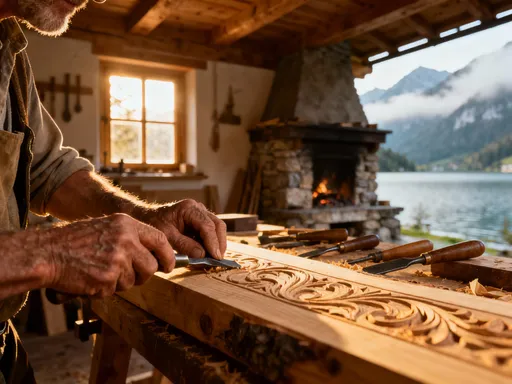
In one such workshop near the Marktplatz, a woodcarver shapes a nativity figure from a single block of walnut, his hands moving with the precision of decades of practice. Shavings curl around his bench like wood shavings frozen in time. He explains that each piece begins with selecting the right grain, respecting the natural form of the wood. Visitors are welcome to observe, ask questions, and even try their hand at simple carving under his guidance. These hands-on moments, though brief, create a profound connection between traveler and tradition. They transform passive observation into active participation, allowing guests to feel the resistance of the chisel, the texture of the grain, and the satisfaction of shaping raw material into form.
Elsewhere, a ceramicist demonstrates the process of salt-glazing, a technique rooted in Hallstatt’s mining history. Salt is fired into the clay at high temperatures, creating a unique, glass-like surface that reflects the village’s identity. She shares how each piece is fired individually, making imperfections not flaws but signatures of authenticity. Nearby, a weaver operates a traditional loom, her movements fluid and rhythmic as she creates a scarf in deep forest green and alpine white. She offers visitors the chance to try basic embroidery patterns, guiding their fingers with gentle patience. These interactive experiences are not tourist attractions in the conventional sense—they are invitations into a world where craft is both livelihood and legacy.
Most workshops welcome drop-in visits during daylight hours, though calling ahead ensures a more personal experience, especially for those interested in trying a technique. These spaces are not large, and their owners value meaningful interaction over high volume. By visiting respectfully and with genuine interest, travelers contribute to the sustainability of these small enterprises. More importantly, they leave with more than a purchased item—they carry the memory of a human connection, a shared moment of creation that deepens their understanding of Hallstatt’s cultural fabric.
Markets and Village Shops: Finding Authentic Pieces Off the Beaten Path
While workshops offer a behind-the-scenes look at craftsmanship, Hallstatt’s markets and village shops provide accessible opportunities to discover authentic handmade goods. The weekly farmers’ market on the Marktplatz, held every Friday morning, is a vibrant gathering where local producers sell fresh alpine cheese, honey, herbal teas, and handcrafted items. Unlike souvenir stalls near the lake entrance, this market is frequented by residents, giving travelers a chance to engage with the community in a natural setting. Here, one might find a basket weaver selling willow trays, a grandmother offering knitted baby booties, or a young potter displaying salt-glazed mugs. The atmosphere is unhurried, the exchanges warm and unhurried—exactly the kind of environment where meaningful connections are made.
Along Seestraße, the main pedestrian lane leading to the lake, several small boutiques curate regional crafts with care. These shops are not chain stores but independently owned spaces that prioritize quality and origin. One boutique specializes in wool textiles, sourcing scarves, blankets, and hats from nearby villages where sheep are raised on alpine pastures. The wool is washed, carded, and dyed using natural pigments—walnut shells for brown, alpine herbs for green, and madder root for red. The shopkeeper takes pride in knowing each weaver by name and often shares their stories with customers. Another shop focuses on wooden crafts, displaying everything from intricate nativity scenes to simple butter molds carved with traditional motifs. These items are not mass-produced; each carries the subtle variations that come from handcrafting.
For travelers seeking authenticity, a few practical tips can make a difference. Look for labels that say “Handmade in Austria” or “Produced in the Salzkammergut.” Genuine craftsmanship often shows slight irregularities—uneven stitching, natural wood grain variations, or subtle differences in glaze—because no two pieces are exactly alike. Avoid items that feel lightweight or overly uniform, as these are likely imported imitations. Engaging with shop owners can also reveal authenticity; those who can speak knowledgeably about the makers, materials, and techniques are usually selling genuine local work. By shopping thoughtfully, visitors not only acquire beautiful objects but also support the continuation of traditional skills in a region where they are deeply valued.
Crafts With a Purpose: The Meaning Behind the Makers
The crafts of Hallstatt are not merely decorative—they serve a deeper cultural and historical purpose. Each object is rooted in the realities of alpine life, shaped by climate, geography, and centuries of adaptation. Wool garments, for instance, were not created for fashion but for survival. The thick, water-resistant wool from native sheep provided essential warmth during long, snowy winters. Patterns and colors often held meaning—certain stripes or symbols identified a person’s village or family, functioning as a quiet form of identity. Today, while modern clothing is readily available, the tradition of knitting and weaving persists because it embodies resilience, self-reliance, and connection to the land.
Similarly, salt-themed ceramics and carvings are more than artistic motifs—they are tributes to Hallstatt’s foundational industry. Salt mining in the region dates back to prehistoric times, and the wealth it generated helped build the village’s distinctive architecture and support its cultural institutions. Artisans incorporate salt into their work in various ways: using salt glaze in pottery, carving salt crystals into decorative forms, or designing pieces that mimic the layered textures of rock salt. These creations are not just aesthetic choices; they are acts of remembrance, keeping alive the memory of the miners who shaped the region’s history.
By purchasing these crafts, travelers contribute to the sustainability of intergenerational knowledge. Many artisans are elders who fear their skills may disappear if younger generations do not take interest. Tourism, when respectful and informed, provides both financial support and moral encouragement. A young woman learning to weave from her grandmother, a teenager apprenticing in a woodcarving studio—these are the future keepers of tradition, and their work is made possible by demand. Every handmade item sold is not just a product but a vote for cultural continuity. It says: your skill matters, your story is worth preserving, and your heritage has value beyond the marketplace.
How to Shop Respectfully: A Traveler’s Guide to Cultural Integrity
As rewarding as cultural shopping can be, it must be approached with mindfulness and respect. These crafts are not commodities to be consumed quickly; they are expressions of identity and labor that deserve recognition. One of the simplest yet most powerful ways to shop respectfully is to ask questions. Inquire about the materials, the process, the history behind a piece. Listen to the answers with genuine interest. Most artisans are eager to share their knowledge, but they appreciate when visitors take the time to understand rather than simply buy. This exchange transforms a transaction into a conversation, fostering mutual respect.
Haggling over prices, common in some travel cultures, is inappropriate when it comes to handmade goods. These items reflect hours—sometimes days or weeks—of skilled labor, and their prices reflect that effort. Reducing them to a bargaining game undermines the value of the craft and the dignity of the maker. Instead, view the cost as an investment in heritage and sustainability. If a piece is beyond budget, consider a smaller item or return later when resources allow. The goal is not to collect as many objects as possible, but to choose one or two with meaning and care.
When visiting workshops, be mindful of space and time. These are working environments, not museums. Arriving early in the day or scheduling a visit by appointment minimizes disruption. Take photos only with permission, and avoid touching tools or unfinished work. Most importantly, resist the temptation to treat culture as décor. A hand-carved crucifix, a traditional folk costume, or a ceremonial salt bowl may be visually striking, but they carry spiritual or communal significance. Removing them from context for aesthetic display can be disrespectful. Instead, focus on items designed for everyday use—mugs, scarves, cutting boards—that allow tradition to live on in functional, honored ways.
Bringing Hallstatt Home: Creating Lasting Connections Through Craft
The true value of a handmade item from Hallstatt reveals itself over time. A ceramic mug used each morning for tea becomes more than a vessel—it becomes a ritual, a quiet reminder of misty mornings by the lake, of the artisan’s hands shaping the clay, of the salt fired into its glaze. A hand-knitted scarf worn during winter carries not just warmth but memory—the image of a weaver at her loom, the sound of her voice explaining her craft. These objects bridge distance and time, transforming travel from a fleeting experience into a lasting connection.
To deepen this bond, consider preserving the story behind each purchase. Keep a small notebook with the artisan’s name, the date, and a few details about the piece. Share the story with family and friends—explain why the pattern on a wooden spoon matters, or how the wool in a blanket was sourced from alpine flocks. These narratives keep the culture alive in daily life, turning a simple object into a conversation starter and a teaching moment. Some travelers even return the story to the maker, sending a photo of the item in use—this small gesture often brings deep joy to artisans, confirming that their work is appreciated and lived with.
In a world of fast fashion and disposable goods, choosing to buy handmade is a quiet act of resistance—a decision to value slowness, authenticity, and human connection. In Hallstatt, it is also an act of preservation. Each purchase supports a tradition that might otherwise fade, ensuring that woodcarving, weaving, and pottery continue not as museum exhibits but as living practices. Travelers who shop with intention become stewards of heritage, helping to sustain a culture that enriches not only Austria but the world.
So when you walk through Hallstatt, let your hands and heart lead the way. Look beyond the postcard views. Seek out the workshops, listen to the stories, and choose one meaningful piece—not because you need it, but because it speaks to you. Let it carry you back to the stillness of the lake, the scent of pine, the pride in a craftsman’s eyes. In doing so, you don’t just take something from Hallstatt. You become part of its story.