You Won’t Believe These Hidden Cultural Gems in St. Moritz
When you think of St. Moritz, glitzy ski resorts and luxury hotels probably come to mind. But beyond the postcard-perfect snowscapes lies a side few travelers ever see—the living, breathing culture of the Engadin Valley. I stumbled upon traditions older than the Alps themselves: whispered Romansh songs, centuries-old winter festivals, and artisan workshops tucked into quiet village corners. This isn’t just a playground for the rich—it’s a place where heritage runs deep. Let me take you somewhere most tourists never go.
Beyond the Ski Slopes: Uncovering St. Moritz’s Cultural Heart
St. Moritz is often celebrated as a symbol of alpine elegance—a destination where celebrities sip champagne on sun-drenched terraces and luxury boutiques line pristine streets. While these aspects are real, they represent only a fraction of what this region offers. Beneath the polished surface of world-class skiing and five-star spas lies a cultural heartbeat that pulses through the Engadin Valley, a high-altitude corridor stretching across southeastern Switzerland. This is where ancient customs are not preserved behind glass but lived daily by families who have called these mountains home for generations.
For many visitors, a trip to St. Moritz means conquering snowy slopes or enjoying gourmet dining. Yet those who venture beyond the tourist trail discover a quieter, more enduring kind of luxury—the richness of tradition. The valley's villages, such as Zuoz, Samedan, and Guarda, remain rooted in rhythms shaped by seasons, language, and craftsmanship. Here, heritage is not a performance for cameras but a way of life passed from parent to child. Exploring this dimension transforms a holiday into something deeper: a meaningful encounter with a resilient mountain culture.
Understanding this hidden layer enhances every aspect of a visit. It shifts the focus from consumption to connection. Instead of merely observing, travelers begin to participate—by tasting traditional foods, listening to local music, or learning a few words in Romansh. These small acts open doors to genuine human interactions. They allow visitors to experience St. Moritz not just as a glamorous escape but as a living cultural landscape where history and modernity coexist in harmony.
The Romansh Legacy: Switzerland’s Forgotten Language
One of the most distinctive features of the Engadin Valley is its linguistic identity. Romansh, a Romance language descended from Latin, is spoken by a small but proud community across Graubünden, the largest canton in Switzerland. In the Engadin, particularly in the Upper Engadin around St. Moritz and the Lower Engadin stretching toward Scuol, Romansh remains an active part of daily life. It appears on street signs, in school classrooms, and in conversations between neighbors. Though only about 0.5% of the Swiss population speaks Romansh today, its survival is a testament to cultural resilience in the face of globalization.
Romansh is not a single uniform language but a collection of five major dialects, with Vallader and Puter being the dominant forms in the Engadin. Hearing it spoken—its soft consonants and melodic intonations—feels like stepping into a forgotten chapter of European history. Unlike German, French, or Italian, which dominate much of Switzerland, Romansh carries the imprint of isolated mountain life, where communities developed their own variations over centuries. To hear a child recite a poem in Romansh at a local festival or listen to a grandmother sing a lullaby in Puter is to witness a living tradition under quiet but determined protection.
Efforts to preserve Romansh are widespread and deeply institutionalized. Bilingual education ensures that children grow up fluent in both Romansh and German. Radio programs, newspapers, and even some television content are produced in the language. Cultural organizations like Lia Rumantscha advocate for its use and visibility. Even the Swiss federal government supports Romansh as one of the nation’s four national languages, though it holds official status only for correspondence with Romansh speakers. These measures have helped stabilize the language, preventing the kind of decline seen in other regional tongues across Europe.
For travelers, engaging with Romansh—even minimally—can be a powerful gesture of respect. Learning simple phrases like "Grondia" (hello), "Tante grazias" (thank you very much), or "Bun di" (good day) can brighten a local’s face and invite warm conversation. It signals that the visitor sees more than just scenery—they recognize the people and their story. In a world where homogenization threatens local identities, such moments of connection matter deeply.
Chalandamarz: Spring’s Wild and Colorful Celebration
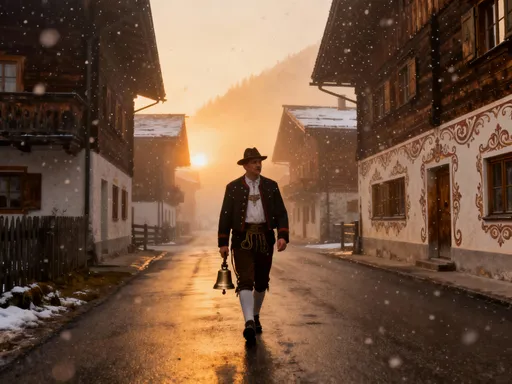
Every year on March 1st, the villages of the Engadin Valley come alive with one of the oldest and most vibrant folk traditions in the Alps: Chalandamarz. This festival, rooted in pre-Christian customs, marks the symbolic end of winter and the awakening of spring. With roots stretching back over a thousand years, Chalandamarz blends pagan symbolism with Christian influences, creating a unique celebration that feels both ancient and immediate. On this day, the silence of the snow-covered valleys is shattered by the thunderous ringing of cowbells, the rhythmic beat of drums, and the laughter of children dressed in traditional attire.
The centerpiece of Chalandamarz is the procession of boys and young men who march through village streets, swinging large cowbells and cracking whips to scare away winter spirits. In some villages, girls also participate, wearing embroidered dresses and carrying small bells. The sound is deafening—a deliberate cacophony meant to awaken the earth and drive out the cold. The bells themselves are often family heirlooms, some weighing over ten kilograms, their deep tones resonating through narrow stone alleys and across frozen meadows.
Following the parade, communal meals bring families and neighbors together. Tables are set outdoors or in village halls, laden with local specialties such as barley soup, cured meats, and warm bread. Wine flows freely, and elders share stories of past Chalandamarz celebrations—how the snow used to lie deeper, how the bells were even louder when they were young. Music fills the air, sometimes performed on alphorns, the long wooden horns native to the Alps, whose haunting melodies echo across the mountains.
What makes Chalandamarz extraordinary is that it is not a reenactment for tourists but a deeply felt tradition maintained by locals. Children look forward to it all year, practicing their bell-ringing and learning the songs. Schools often close for the day, and even those who have moved away make efforts to return. The festival embodies a collective belief in renewal and continuity—values that resonate strongly in mountain communities where survival has always depended on unity and resilience. For visitors lucky enough to witness it, Chalandamarz offers a rare glimpse into a culture that honors time not through calendars but through ritual.
Alpine Craftsmanship: From Woodcarving to Embroidery
Scattered throughout the Engadin Valley are small workshops where time seems to move differently. Inside these modest spaces, artisans practice crafts that have been refined over generations. Their work—woodcarving, embroidery, ceramics—is not created for mass markets but as expressions of identity and utility. Each piece tells a story: of hands shaped by cold, of patterns passed down through families, of materials drawn directly from the surrounding landscape. These crafts are not relics but living traditions, evolving while staying true to their roots.
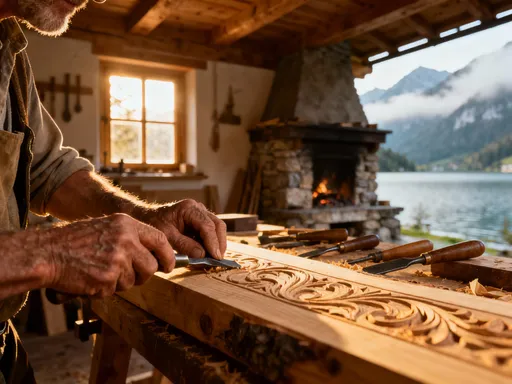
Woodcarving is one of the most celebrated art forms in the region. Local craftsmen use pine, larch, and walnut to create everything from ornate picture frames to intricately carved storage boxes. The designs often feature geometric motifs, floral patterns, or scenes from alpine life—shepherds, goats, chalets. One artisan in Zuoz, whose family has worked with wood for over a century, explained that each cut must follow the grain, not fight it. “The tree teaches patience,” he said. “You cannot rush what nature built slowly.” His workshop, filled with wood shavings and the scent of resin, felt like a sanctuary of focus and tradition.
Equally distinctive is Engadin embroidery, known for its bold colors and symmetrical patterns. Women historically created these textiles for festive clothing, particularly for Chalandamarz and weddings. The most iconic piece is the Sursilvan apron, adorned with red, black, and white geometric designs stitched by hand. Today, some cooperatives continue this work, training younger generations in the technique. Visitors can purchase embroidered table linens, handbags, or decorative panels—each piece a wearable or displayable fragment of cultural memory.
Ceramics, too, reflect the region’s aesthetic. Local potters use clay sourced from nearby riverbeds, shaping it into bowls, mugs, and plates painted with sgraffito designs—patterns scratched into a dark glaze to reveal a lighter layer beneath. These items are not merely decorative; they are used daily in homes and inns, linking past and present through function. Supporting these artisans—by purchasing their work or simply visiting their studios—helps sustain a culture that values slowness, care, and authenticity in an age of fast production.
Sacred Spaces: The Quiet Beauty of Engadin Churches
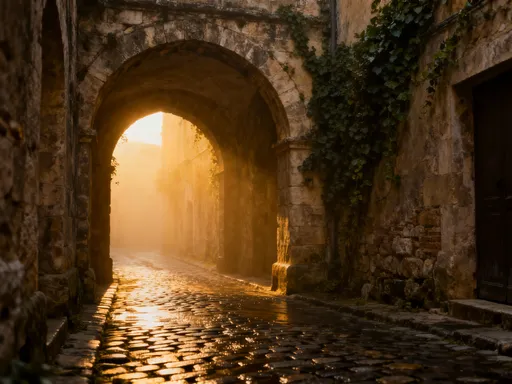
Rising from the valley floor like silent sentinels, the whitewashed churches of the Engadin are among the region’s most striking architectural treasures. With their sgraffito-decorated facades—etched with floral patterns, biblical scenes, and celestial symbols—these stone chapels blend Romanesque solidity with alpine simplicity. Many date back to the 12th and 13th centuries, built when Christianity took root in these remote highlands. Unlike grand cathedrals in cities, these churches were designed for small, tight-knit communities, serving as both spiritual centers and communal anchors.
One of the most renowned is the Church of St. Johann in Müstair, a UNESCO World Heritage Site located just beyond the Engadin but culturally connected. Its 9th-century frescoes, among the best-preserved in Europe, depict biblical narratives in vivid detail. Closer to St. Moritz, the church in Guarda features a sgraffito facade from the 16th century, its intricate lines telling stories of faith and daily life. Inside, the atmosphere is hushed and reverent. Wooden pews, hand-carved altars, and stained-glass windows filter light into soft hues, creating a space that invites reflection.
These churches are not museums but active places of worship. Sunday services are still attended by locals, many of whom walk from neighboring hamlets. During festivals like Chalandamarz or Easter, the churches become focal points for processions and blessings. Even in summer, when tourists wander through, there is a sense of sacred continuity—a recognition that these buildings are not just beautiful but essential. They have witnessed centuries of births, marriages, and farewells, standing as silent witnesses to the valley’s endurance.
For visitors, entering one of these churches is an act of quiet discovery. It requires no admission fee, only respect. There are no loud guides or crowds, just the occasional rustle of a prayer book or the echo of footsteps on stone. In a world that often equates value with spectacle, these spaces remind us that meaning can reside in stillness. They are not hidden in the sense of being secret, but in the sense of being overlooked by those who seek only the dramatic and the photogenic.
Farm-to-Table Traditions: The Taste of Engadin Culture
In the Engadin Valley, food is more than sustenance—it is memory made edible. The cuisine reflects centuries of adaptation to a harsh climate, where long winters and short growing seasons shaped a diet based on preservation, dairy, and hardy grains. Dishes like Pizokel, a hearty noodle made from buckwheat flour, and Capuns, chard leaves stuffed with dough and baked in broth, are not trendy farm-to-table concepts but time-tested recipes born of necessity. They are served in family-run inns, known locally as Gasthäuser, where the menu changes with the season and the chef is often the owner’s wife.
One evening in a small village tavern, I watched as elders gathered around a long wooden table, sharing a platter of air-dried beef, locally known as Bündnerfleisch. Sliced paper-thin and served with rye bread and pickled onions, it was accompanied by a robust Pinot Noir from a nearby vineyard. A man in his seventies told stories of herding cattle up to high pastures in summer, of making cheese in mountain huts, of winters when the only vegetables were stored in root cellars. His words, like the food, were simple but rich with meaning.
Dairy farming remains central to the region’s agricultural life. In summer, cows are led to alpine meadows where they graze on wildflowers and herbs, producing milk with a distinctive flavor. This milk becomes Sura Kees, a sour milk cheese unique to the Engadin, or Alpkäse, a firm mountain cheese aged in wooden barrels. These products are sold at local markets or served in restaurants committed to regional sourcing. Even hotels in St. Moritz increasingly highlight local ingredients, recognizing that true luxury lies not in imported caviar but in the authenticity of place.
For travelers, dining in the Engadin is an invitation to slow down and savor. It is not about fine dining in the conventional sense but about connection—to the land, to the people, to history. A meal here is not rushed; it unfolds over hours, accompanied by conversation and sometimes song. To eat in this valley is to understand that culture is not only seen but tasted, and that the most enduring traditions are often the ones served on a plate.
Traveling with Respect: How to Experience Culture, Not Just Observe It
As interest in authentic travel grows, so does the risk of cultural commodification. The very traditions that make the Engadin special can be threatened by over-tourism, intrusion, or superficial engagement. To truly honor this culture, visitors must move beyond observation and practice mindful participation. This means approaching the region not as a consumer but as a guest—one who listens more than speaks, observes before acting, and supports rather than disrupts.
Simple gestures can make a difference. Learning a few words in Romansh shows respect for the local language. Attending a festival like Chalandamarz quietly, without blocking processions for photos, allows the event to unfold naturally. Purchasing handmade crafts directly from artisans ensures that economic benefits stay within the community. Choosing family-run inns over international hotel chains supports local livelihoods. Even small choices—like asking permission before photographing people or refraining from loud behavior in sacred spaces—contribute to a culture of respect.
Responsible tourism also means recognizing that some moments are not meant for sharing online. Not every experience needs to be documented. There is value in witnessing something sacred or intimate without turning it into content. The goal is not to collect experiences like souvenirs but to carry them inward, allowing them to change how we see the world. When travelers approach the Engadin with humility and curiosity, they become part of a larger story—one of preservation, continuity, and mutual understanding.
Local organizations welcome respectful visitors and often provide guidelines for cultural etiquette. Some villages offer guided heritage walks led by residents who share personal stories and historical insights. These tours, unlike commercial excursions, prioritize depth over speed. They invite questions but also encourage silence—moments to simply be present in a place where time moves differently. By choosing such experiences, travelers help ensure that the Engadin’s cultural treasures remain alive, not frozen in display cases but thriving in everyday life.
Conclusion
St. Moritz is more than a destination of luxury and leisure. Its true magic lies in the quiet strength of its cultural soul—the language spoken in village squares, the bells ringing in March winds, the hands shaping wood and thread, the flavors passed down through generations. These are not attractions to be checked off a list but invitations to connect with a way of life that has endured for centuries. For the thoughtful traveler, the journey is not measured by how many slopes were skied or how many Michelin stars were earned, but by how deeply one felt the pulse of this remarkable place.
By looking beyond the glittering surface, by slowing down and engaging with respect, visitors can become part of a living heritage. They help ensure that the traditions of the Engadin Valley continue not as museum pieces but as vibrant, evolving expressions of identity. In a world that often moves too fast, St. Moritz offers a rare gift: the chance to experience time not as something to conquer, but as something to inhabit. The Alps have always been a place of refuge, resilience, and renewal. And for those willing to listen, they still whisper their oldest stories.